Why creative writers should study anthropology– a personal reflection. 05/15/2026
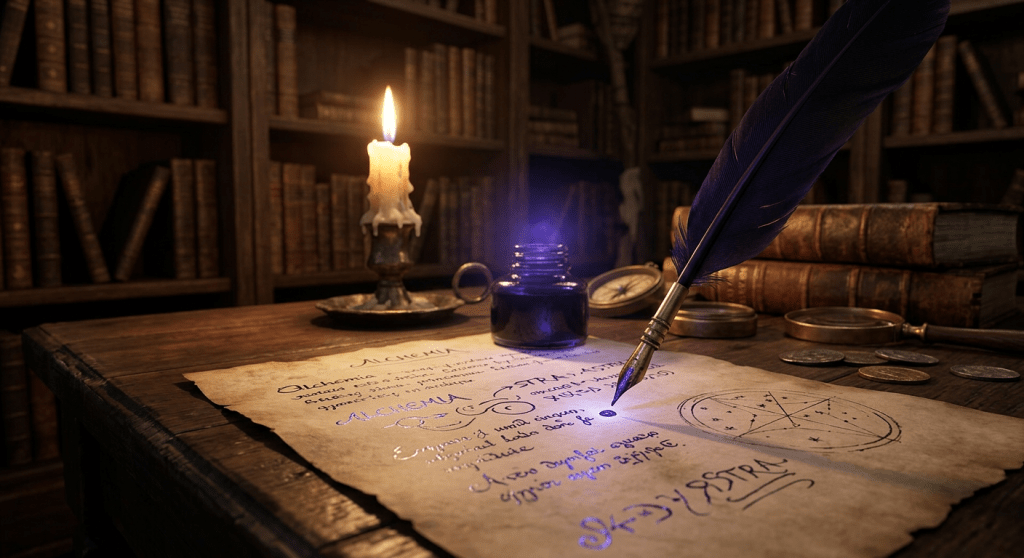
There is something deeply human about storytelling.
Long before novels, publishing houses, or creative writing degrees existed, people were already trying to make sense of the world through stories. Around campfires. Through symbols scratched into stone. Through myths, oral traditions, gestures, and eventually language itself.
As a Creative Writing major, I’ve become increasingly fascinated by anthropology—particularly linguistic anthropology—and the way it intersects with fiction writing. The more I study the development of humanity, the more I realize that storytelling has never just been entertainment.
It is preservation.
Connection.
Memory.
Survival.
Language Had to Begin Somewhere
Humans didn’t begin with beautiful prose and fully formed languages. We had to start somewhere.
Anthropologists believe early humans communicated through simple vocalizations, gestures, and body language before language evolved into something more precise. As societies became more complex, communication had to evolve alongside them.
This growth was both biological and social:
more food meant brain development, and larger societies demanded clearer communication.
What fascinates me most is how much of communication is still non-verbal.
As writers, we often focus heavily on dialogue, but linguistic anthropology reminds us that silence, posture, gestures, and implication can say just as much as spoken words. A character looking away at the wrong moment can reveal more than a paragraph of exposition ever could.
Studying the origins of language can also help writers create more believable fictional dialects and cultures because language never develops randomly—it develops around necessity, environment, and human connection.
The Written Word is Alive
From cuneiform tablets to modern romantasy novels, the written word has spent thousands of years evolving alongside humanity.
Originally, cuneiform likely existed for simple record keeping. The people creating it could never have imagined what writing would eventually become.
Stories. Poetry. Laws. Religion. History.
Entire civilizations preserved through language.
What I love most about studying the evolution of writing is realizing that language is not fixed. It changes constantly because people change constantly.
Compare a modern novel to one written even a century ago and the differences become obvious:
sentence structure, pacing, vocabulary, slang, emotional openness—all of it shifts with culture.
Language behaves almost like a living organism.
New words emerge. Meanings change. Slang develops. Certain phrases disappear entirely.
As writers, understanding this makes our work richer. It allows us to think more intentionally about voice, tone, and the social environment our characters exist within.
Storytelling Has Always Been Cultural
Storytelling is one of humanity’s oldest traditions.
Before written language, stories were carried through oral traditions and passed down from generation to generation. Myths and folklore helped explain the unknown, preserve values, and teach lessons about survival, morality, or identity.
That idea changes the way I think about fiction.
Stories are never truly created in isolation. Even the most fantastical worlds are still shaped by the fears, beliefs, obsessions, and experiences of the person writing them.
You can feel the humanity underneath fiction.
And because of that, storytelling carries a certain responsibility.
Writers are not only entertaining people—we are also helping interpret the world around us. Whether intentional or not, stories preserve cultural values and emotional truths for future generations.
Literature as a Time Capsule
One of the oldest surviving works of literature, The Epic of Gilgamesh, dates back to around 2100 B.C., yet its themes still feel familiar today:
grief, friendship, fear of death, the search for meaning.
That alone says something profound about humanity.
Even thousands of years later, we still recognize ourselves in those stories.
Modern literature functions the same way. The novels we write today are preserving contemporary fears, language, politics, relationships, humor, and emotional experiences for the future.
In many ways, fiction acts as a cultural time capsule.
Future generations may study our stories the same way we study ancient myths now—not just to understand plot, but to understand us.
Anthropology Makes Worldbuilding Feel Real
Anthropology is especially valuable when it comes to worldbuilding.
Strong worldbuilding is not just aesthetics.
A believable society needs:
- traditions
- belief systems
- social structures
- economics
- rituals
- power dynamics
- shared histories
Anthropology helps writers think about how cultures actually function beneath the surface.
A beautifully designed fantasy city will still feel hollow if the people living there do not behave like products of an actual society.
Readers can feel when a world has history.
The strongest fictional worlds feel lived in because they reflect real human patterns.
Final Thoughts
I believe writers should remain deeply curious about the world around them.
Anthropology reminds us that storytelling is not separate from humanity—it is one of the clearest expressions of it. Language, culture, history, and storytelling are all intertwined.
The more we understand people, the better we understand stories.
And perhaps that is what fiction really is:
our attempt to preserve ourselves long enough for someone else to understand us later.
(This post was adapted from a reflection paper previously written for my anthropology class. All thoughts are my own and there is potential for error. )
What stood out to you? Let me know your thoughts in the comments below.


Leave a comment